Electric cars are considered by most to be modern technology, but in reality: the first electric vehicle was built in 1837. Until the 1930s, a third of cars were electric. They were popular because they were quieter, jostled less, and were easier to start. The internal-combustion engines powered by gas began to dominate because the oil boom significantly lowered prices.
Today, there are three main types of Electric Vehicles:
- Electric Vehicles (EVs) or Battery Electric Vehicles (BEVs): Have a battery that is charged by plugging the vehicle into charging equipment. These always operate in all-electric mode and run solely on electricity. They produce no tailpipe emissions.
- Plug-In Hybrid Electric Vehicles (PHEVs): Powered by an internal combustion engine and an electric motor that uses energy stored in a battery. These can operate in all-electric mode, which can be plugged into an electric power source to charge. Once the battery is depleted, the vehicle will operate on gasoline, similar to a conventional hybrid, until the battery is charged again.
- Fuel Cell Electric Vehicles (FCEVs): Run on pure compressed hydrogen. Like conventional gasoline cars, these use fuel tanks, but unlike conventional cars, these tanks are pressurized up to 10,000 per square inch (psi). FCEVs use a propulsion system similar to that of Battery Electric Vehicles (BEVs), where energy (hydrogen) is converted to electricity, powering the car and producing a zero-emission vehicle.
Why Electric Vehicles? This technology is growing in popularity because:
- It produces low or no tailpipe emissions.
-
Using electricity is significantly cheaper than using gasoline (compare the cost of owning the most popular vehicles in the US. Here is a list of all the electric vehicles currently available on the American market, explaining cost, range, safety, etc)
- More storage space
- EVs require less maintenance than gas-powered vehicles because EVs have fewer moving parts and fewer fluids. This means that there is no need for routine maintenance like oil changes, cooling system flushes, transmission servicing, replacements for air filters, drive belts, or spark plugs. EVs also have regenerative braking systems, which reduce the wear-and-tear on brakes and brake pads. Some EV owners report that their brake pads last more than 200,000 miles, compared to the 35,000-mile average for conventional cars.
- There are incentives for purchasing a Plug-in hybrid or all-Electric Vehicle. Car dealers offer rebates, and utilities may give you a free home charger. There are tax credits for businesses and residents to offset the cost of installation. Use this tool to explore the many incentives in your area! Chargers can even provide a revenue stream!
- The energy stored in a car battery, if plugged into a home integration system, can be pulled from during peak energy demand hours and sold back to the energy grid at peak unit price. This lowers overall demand on the grid. When the demand hours are over, and energy is cheaper, the vehicle recharges, reducing cost for the consumer, effectively doubling America’s energy storage capability while lowering everyone’s cost.
 Many potential buyers are worried about how electric cars can be powered, but everyone already has a “level 1 charger” in their home, which is the same standard outlet we all have for our small appliances. There are 3 levels of chargers in total; the difference between them is the speed at which a battery fully charges. Level 2 is a quite common charger as well (our larger appliances usually run on these). Level 1 and 2 chargers can often be installed at no cost after utility rebates and incentives. Level 3 are the most common public facing chargers.
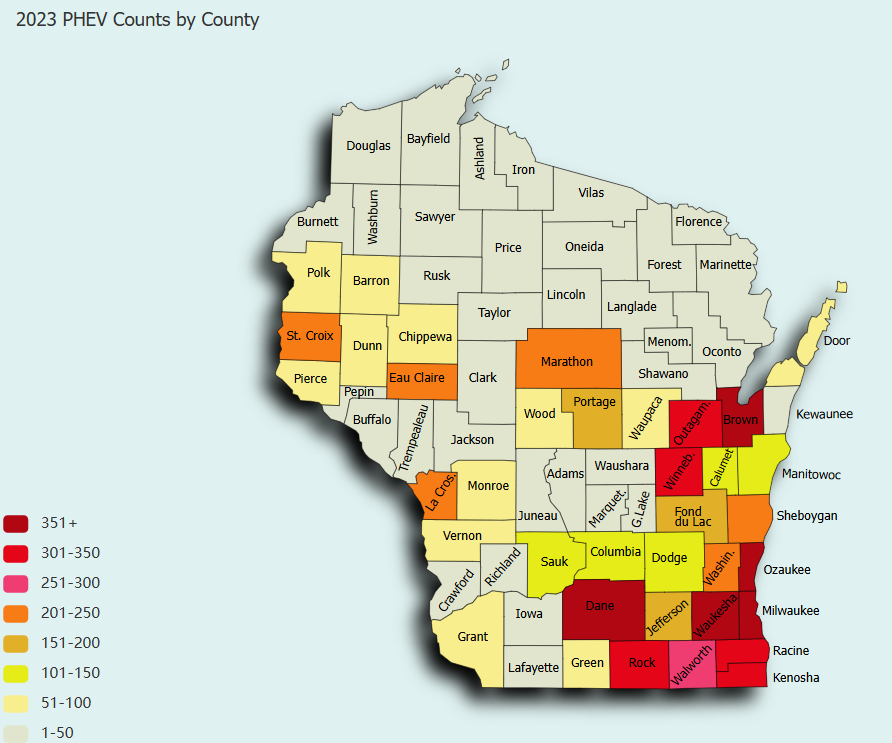
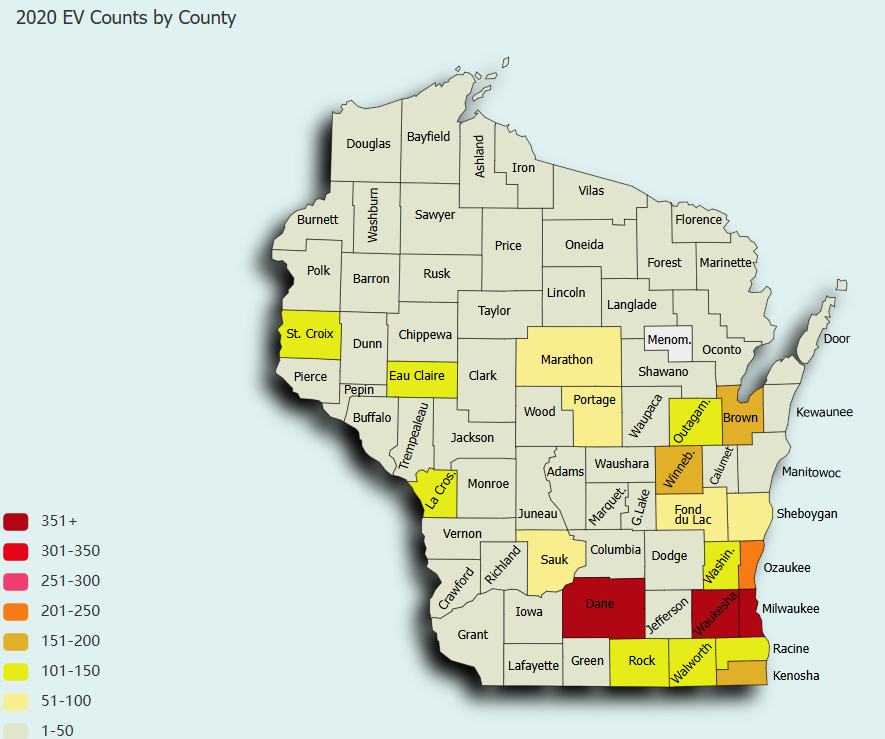
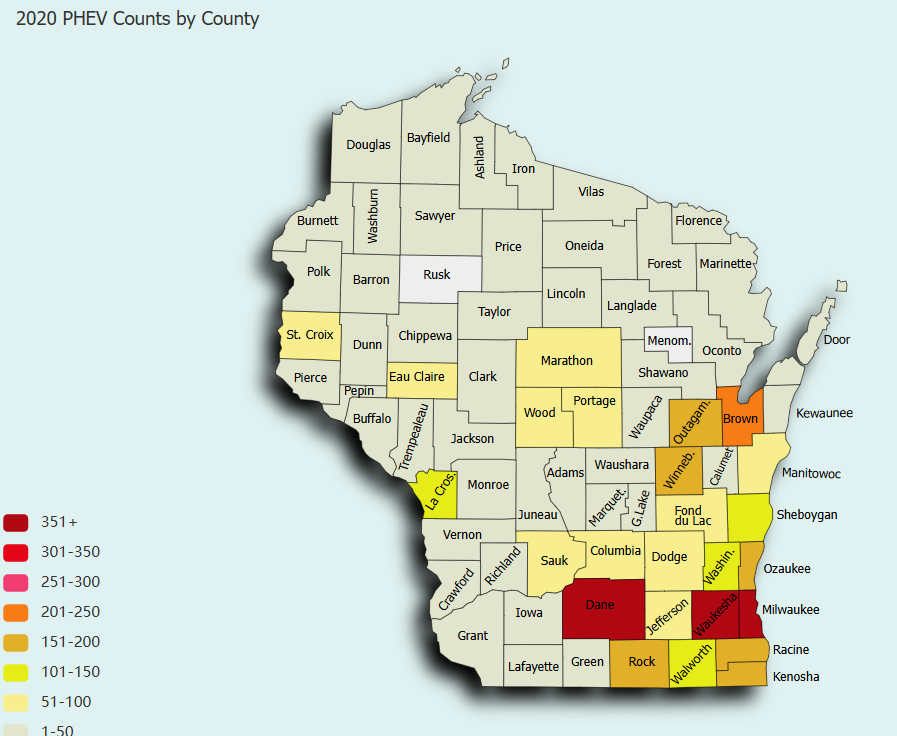
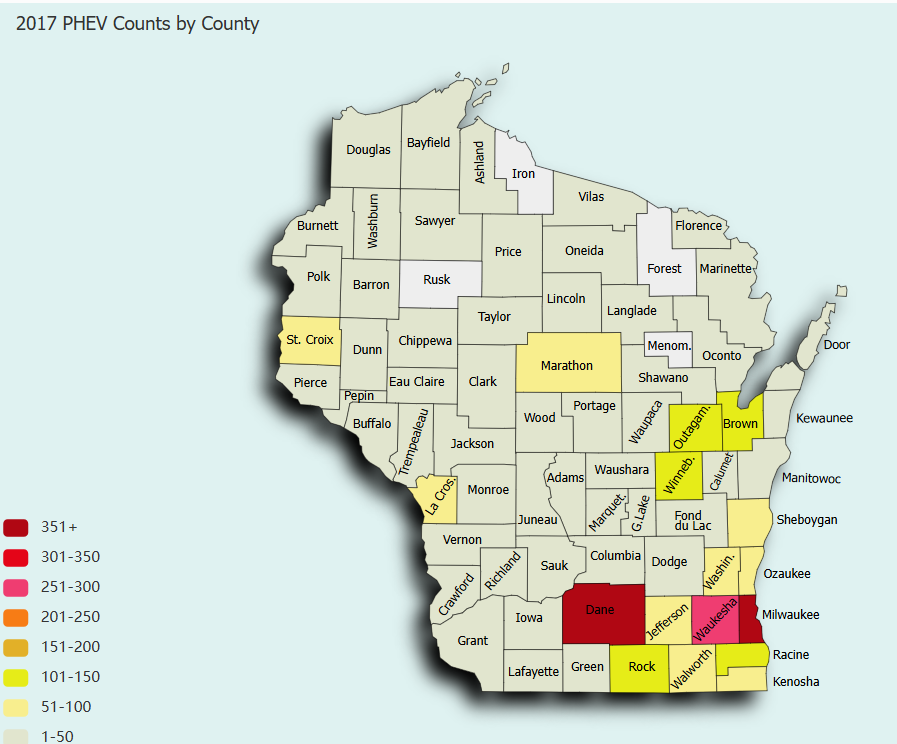
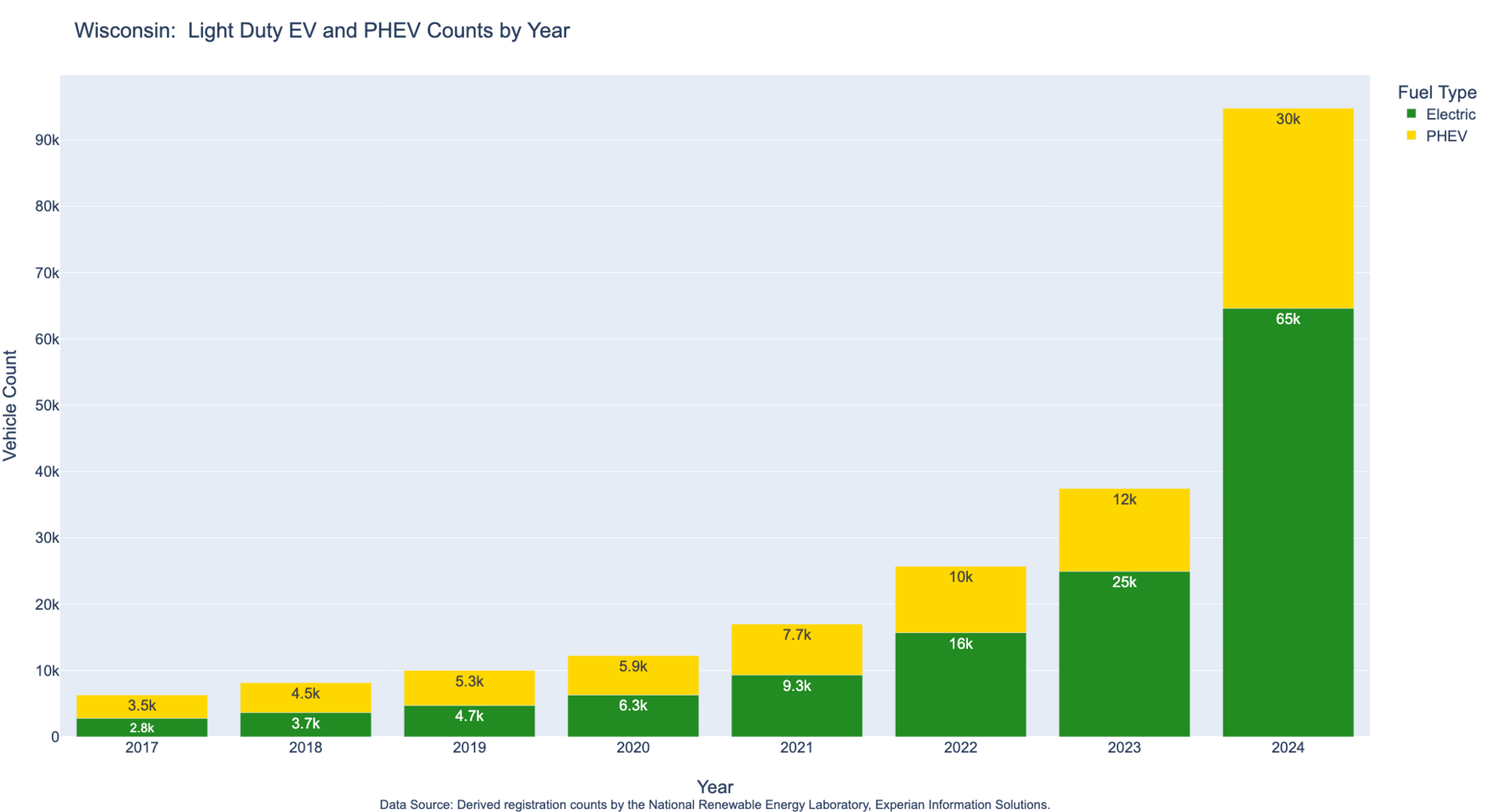
As of 2024, Wisconsin has 654 publicly accessible chargers, with 1,558 available ports, 503 of which are “DC FAST” high-speed (can fully charge a battery within 20 minutes). 53 more chargers (228 ports) are slated to be built along Wisconsin’s main highways within a year. There are currently 23,000 registered EV owners in Wisconsin. Electric vehicle registrations have increased, on average, by 51.9% each year since 2013. This is expected to grow even more as many Wisconsin mayors have committed to electrify at least 50% of their municipal fleets by 2030.